
Exploring the French Riviera by Sea: A Complete Guide to Yacht Hire in Cannes for 2026
There’s a specific moment at dusk when the French Riviera stops being a postcard and becomes something else entirely. The pine-and-salt air settles low over the water, the light shifts to apricot, and the silhouettes of superyachts cut clean lines against a sky that looks almost too deliberate to be real. I trained as an architect at the École Nationale Supérieure d’Architecture de Paris-Belleville, and most of my working life is spent elbow-deep in the structural logic of old Breton houses — granite walls, slate roofs, the kind of permanence you can press your hand against and feel pushing back. But standing on a deck off Cannes, watching the coastline slowly recede, I keep recognizing the same principles at work: form, function, the quiet conversation between a built thing and its setting. A well-designed yacht and a well-designed building aren’t so different, really. Both ask the same question — how do you move through space with intention? If you want to understand the Côte d’Azur properly, the answer in 2026 is: from the water.
Why Cannes Is the Ultimate Starting Point for a Riviera Voyage
Cannes earns its reputation as a departure hub, and not just on paper. Port Pierre Canto and the Vieux Port are genuinely impressive pieces of coastal infrastructure — not merely functional, but considered in a way that most working marinas aren’t. Still, the moorings are almost beside the point. What makes Cannes work as a base is the way the city itself flows toward the sea. Most waterfront towns feel oddly cut off from their own shoreline — a highway here, a concrete wall there, some invisible barrier between civic life and the water. Cannes doesn’t do that. The urban fabric runs right down to the edge, and stepping from the Croisette onto a boat feels like a natural continuation rather than an escape from something.
Add the cultural calendar — the film festival, MIPIM, Cannes Lions — and you’ve got a city that treats the sea as part of its identity, not just its scenery. That distinction matters more than it sounds.
The Geography That Makes Cannes a Sailor’s Gateway
The geography here is almost unfairly good. Cannes sits centrally between Nice and Saint-Tropez, which means you’re not committing to a single direction the moment you leave port. The Lérins Islands are minutes away. Antibes and its fortified old town are a short cruise east. Monaco is reachable in an afternoon if you want it. And to the west, the Esterel coastline — those dramatic red volcanic cliffs dropping straight into deep blue water — is practically on your doorstep. I’ve sailed out of other ports along this coast, and none of them give you this range of wildly different landscapes within a single day’s reach. That flexibility is rare, and it’s worth factoring into your planning.
Understanding Yacht Hire Options in Cannes for 2026
The charter market has matured considerably, and 2026 offers a genuinely varied selection. The four main categories are bareboat, skippered, crewed, and day charters — each suited to a different kind of traveller and a different appetite for involvement. Bareboat means you’re the captain, which requires recognized qualifications and real comfort with French maritime regulations. Crewed charters sit at the other end of the spectrum: a full hospitality team, someone else handling everything, pure luxury if that’s what you’re after. Skippered charters land in the middle — a local captain manages navigation while you focus on actually enjoying the trip. For anyone starting to map out options, cannes yachs thire is a practical place to begin comparing vessels and building an itinerary that fits what you’re actually after.
Bareboat vs. Skippered Charters — Which Is Right for You?
Honestly, this comes down to how much mental energy you want to spend on seamanship versus scenery. If you hold an ICC and know French maritime rules, bareboat gives you real freedom — you go where you want, when you want, no schedule to negotiate with anyone. But the Riviera in summer is busy. Crowded anchorages, tight marina berths, ferry traffic near the islands. It demands constant attention, and that attention has a cost.
A skippered charter removes all of that. And a good local skipper isn’t just a navigator — they know the coves that don’t appear on popular itineraries, the anchorages that empty out by late afternoon, the spots worth lingering in past sunset. That local knowledge is genuinely worth something. I’d argue it’s worth more than most people expect before they’ve experienced it.
Day Charters and Half-Day Options
Not everyone wants a week at sea, and that’s completely fine. Day charters in 2026 are a clean, low-commitment way to get a real feel for the Mediterranean without the planning overhead of a multi-day voyage. A typical itinerary runs along the Esterel, drops anchor at the Lérins Islands for lunch, and has you back in port by sunset. Most include a skipper, fuel for the route, and basic refreshments. No logistics to manage, no overnight planning to stress over. Just a day on the water — which, on this coast, is never just a day on the water.
The Lérins Islands — A Must-See Destination from Cannes
Sailing out of Cannes without stopping at the Îles de Lérins would be a genuine mistake. Sainte-Marguerite and Saint-Honorat sit just a few nautical miles offshore, and the contrast with the Croisette is immediate and striking — quieter, older, operating on a completely different register. I’m drawn to Fort Royal on Sainte-Marguerite every time I’m out here. The layered masonry, the geometric bastions, the whole logic of 17th-century coastal defense made visible in stone — it’s the kind of structure that rewards slow looking, the kind that gives something back each time.
Saint-Honorat is different again: a working Cistercian monastery, the ruins of a fortified seaside abbey, centuries of occupation compressed into a small island that somehow doesn’t feel crowded by its own history. Anchoring in the protected marine channel between the two islands — clear water, quiet, the fort visible on one side and the monastery on the other — is one of those experiences that’s genuinely hard to replicate anywhere else on the Riviera.
Coastal Architecture and Hidden Anchorages Along the Riviera
One of the things I value most about sailing this coast is the vantage point it gives you. From the water, you see the Belle Époque villas of Cap d’Antibes the way they were actually meant to be seen — not glimpsed through iron gates or over high hedges, but fully, from the sea, the way their architects intended. You can pass Roquebrune and catch Eileen Gray’s E-1027 on its cliffside perch: that brilliant modernist geometry in direct, almost argumentative conversation with the rock it sits on. It’s a 20th-century masterpiece, and the only way to really appreciate its relationship with the landscape is from a boat. The land approach doesn’t give you that.
Between the resort towns, the old fishing villages are still there too — pastel facades, small harbours, the kind of vernacular architecture that doesn’t make it into the glossy guides but tells you more about this coast than any grand villa ever could.
Anchorages Worth Seeking Out Between Cannes and Monaco
The marinas get the attention, but the anchorages are where the real sailing happens. Villefranche-sur-Mer has one of the deepest natural harbours in the Mediterranean — the tall, colourful townhouses rising above the waterline look genuinely spectacular from the deck, especially in the late afternoon light. West of Cannes, the calanques near Théoule-sur-Mer are worth seeking out: red rock formations, deep water, the kind of place you want to stay longer than you planned. For an overnight stop, the bay at Beaulieu-sur-Mer offers solid holding and mooring buoys that protect the Posidonia seagrass below — which matters both ecologically and practically, since it keeps the water clear.
Practical Planning Tips for Chartering in 2026
Timing shapes everything here. July and August are peak season — busy anchorages, higher prices, the full social circus running at full volume. I’d push for May, June, or September instead. The water’s still warm, the anchorages breathe, and the light for photographing coastal architecture is genuinely better — softer, more directional, less bleached out. Book at least six months out if you want the best vessels at reasonable rates; the good ones go early and they don’t come back.
And if you’re booking a crewed yacht, read the APA (Advance Provisioning Allowance) terms carefully. It covers fuel, marina fees, and food — and depending on how you sail, it can move your total cost significantly. It’s not a hidden fee exactly, but it catches people off guard more often than it should.
What to Expect on Board — Comfort, Cuisine, and the Riviera Lifestyle
Life on a charter yacht runs at a different pace, and that’s the whole point. Mornings start with a swim off the stern before the sun gets serious, then breakfast on the aft deck while the anchorage is still quiet and the light is still doing interesting things. Provisioning is worth doing properly — the Forville Market in Cannes has excellent fresh produce, local cheeses, and wines that travel well. Or you can hand it off to a catering service and not think about it at all. Both approaches work.
Either way, with a skipper handling navigation and acting as an informal host, the day organizes itself around pleasure rather than logistics. It’s a real contrast to the Croisette — which, given how good the Croisette is, is saying something.
Conclusion — Setting Sail on the Côte d’Azur in 2026
Coming back into port as the lights of Cannes start to come on is one of those moments that stays with you longer than you expect. Yacht hire here isn’t the exclusive preserve it once was — the 2026 market covers a genuine range of budgets and vessel types, and the options are better serviced than they’ve ever been. Seen from the water, the French Riviera reveals something it keeps carefully hidden on land: the full conversation between the natural coastline and everything humans have built along it over centuries. It’s a perspective worth having. At least once.
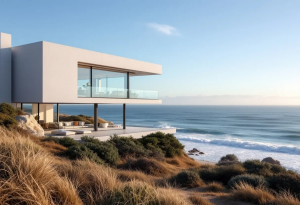
Dans le monde de l'architecture moderne, on parle beaucoup de durabilité et de bien-être. La lumière naturelle est devenue un Read more
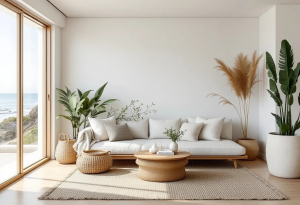
Le design minimaliste côtier, c'est l'art de marier simplicité, nature et tranquillité. On recherche de plus en plus des espaces Read more